

The United States Department of Agriculture (USDA) figures that it will cost a middle-income family with a child born in 2013 about $245,340 ($304,480 adjusted for projected inflation) for food, housing, childcare and education, and other child-rearing expenses up to age 18. Costs associated with pregnancy or expenses occurred after age 18, such as higher education, are not included.
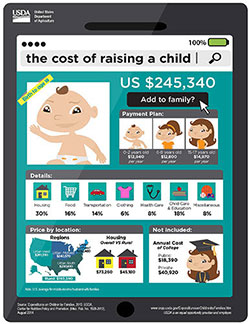 This amounts for $39,254.40, or about $2,309 per year, for food, which eats up 16% of the budget. Only housing (30%) and child care/education (18%) expenses are higher. Just how much of the food expenditure will be for frozen products was not detailed in the Washington, DC-headquartered USDA’s annual report, entitled Expenditures on Children and Families, but also known as the Cost of Raising a Child.
While the current total amount represents an overall 1.8% increase from 2012, the percentages spent on each expenditure category remain the same. As in the past, the costs by location are lower in the urban South ($230,610) and rural ($193,590) regions of the country. Families in the urban Northeast incurred the highest costs to raise a child ($282,480).
“In today’s economy, it’s important to be prepared with as much information as possible when planning for the future,” said USDA Food, Nutrition and Consumer Services Under Secretary Kevin Concannon. “In addition to giving families with children an indication of expenses they might want to be prepared for, the report is a critical resource for state governments in determining child support guidelines and foster care payments.”
The numbers, issued annually, are based on data from the federal government’s Consumer Expenditure Survey, which is said to be the most comprehensive source of information available on household expenditures. For the year 2013, annual child rearing expenses per child for a middle-income, two-parent family ranged from $12,800 to $14,970, depending on the age of the child.
The report, developed by the USDA Center for Nutrition Policy and Promotion (CNPP), notes that family income affects child rearing costs. A family earning less than $61,530 per year can expect to spend a total of $176,550 (in 2013 dollars) on a child from birth up to age 18. So-called “middle-income” parents with an income between $61,530 and $106,540 can anticipate spending $245,340; and a family earning more than $106,540 can figure on parting with $407,820.
In 1960, the first year the report was issued, a middle-income family could have expected to spend $25,230 ($198,560 in 2013 dollars) to raise a child until the age of 18. Housing was the largest child-rearing expense both then and now. Health care expenses for a child have doubled as a percentage of total child rearing costs during that time. In addition, some common current-day costs, such as child care, were negligible in 1960.
Expenses per child decrease as a family has more children. Families with three or more children spend 22 percent less per child than families with two children. As families have more children, the children can share bedrooms, clothing and toys can be handed down to younger children, food can be purchased in larger and more economical quantities, and private schools or child care centers may offer sibling discounts.
The full report is available online at www.cnpp.usda.gov.