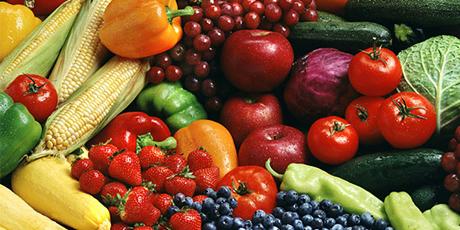

Let them eat frozen vegetables! And for good reason, as underscored by Baroness Jolly during a House of Lords debate held on July 24 in the British Parliament.
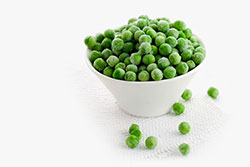 “Frozen vegetables are as valuable as fresh in meeting our ‘five a day’ [recommended portions to eat],” she stated. “Many of us will be aware from adverts that many of our vegetables, and certainly peas, are frozen quickly, so retain much more value…when they reach the supermarket shelf.”
Emphasizing that the goal is to encourage greater overall consumption of fruit and vegetables, regardless of their production method, and thus reducing health inequalities associated with poor diets, the Liberal Democrat remarked: “All fruit and vegetables count toward this, whether fresh or frozen, dried or canned, organic or not. There is no evidence to suggest that there is a nutritional premium in some forms above others.”
 Baroness JollyNoting that only 24% of adults in Britain’s lowest-income recipients consume five portions of vegetables and fruits per day, compared with 38% of those in the high-income bracket, the Baroness stated: “We encourage families to get the best value for their vouchers, but we would not expect them to prioritize organic products.”
Her comments were part of a debate on health and organic foods in presented in a forum, as Lord Taverne put it, “to ask Her Majesty’s Government what is their assessment of the analysis made of the health benefits of organic food recently published in the British Journal of Nutrition.
Caught in the crossfire of discussions was the wisdom of the national treasury’s annual allocation of approximately £20 million to subsidize the organic industry through the Department for Environment, Food and Rural Affairs (DEFRA). As far as some critics of the Department’s organic promotion budget are concerned, cash-challenged families in Britain should not be duped into thinking that higher-priced organic foods are necessarily more nutritious or healthier for them.
“This study does not change our current advice that organic fruit and vegetables do not offer meaningful nutritional benefits over and above conventionally produced crops,” said Baroness Jolly.

“Organic food costs more, so that those with modest means who feel they ought to buy it for health reasons may spend less on fruit and vegetables,” commented Lord Taverne, who kicked off the debate. “Why does organic food cost more? It is not because organic farmers exploit the public, but because the yield of organic crops is lower; it is a less efficient use of land. The last thing the world needs is the less efficient use of good agricultural land. As the noted environmentalist James Lovelock has observed, if the whole world converted to organic farming, we would feed around one-third of the world’s population.”
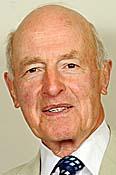 Lord TaverneLord Taverne continued: “DEFRA should make one important change of policy. It should stop spending more than £20 million a year on subsidizing farmers to change to organic farming. Instead, the money should be spent on public research in plant science at our world-class institutes – the John Innes Centre, Rothamsted and the Scottish Crop Research Institute – for which £20 million would make a huge difference. It would be a far more beneficial use of public funds.”
As far as the Liberal Democrat is concerned, the “foundation of the organic movement owes more to myth than to evidence,” and for some, it is “a kind of religion.”
He went on to say that opinion polls suggest that those who buy organic products do so primarily because they believe them to be free of pesticides. Yet, he added, “the safety threshold for the use of artificial pesticides (in the UK) is so cautiously set that there is virtually no possibility of harm from their residues when we eat conventionally grown food. As the noble Lord Krebs, and others have pointed out, one cup of coffee contains more carcinogens than you would ingest from a whole year’s consumption of pesticide residues in fruit and vegetables. Of course, that should not stop you drinking coffee.”
Lord Taverne said that the organic movement has ignored the study conducted by Dr. Alan Dangour for the Food Standards Agency, which found that there are no extra health benefits gained from organically grown crops compared to those grown conventionally. The same conclusion was reached in a detailed report done for the American College of Physicians in 2012.
The Lord questioned the study financed by the Sheepdrove Trust, an advocate of organic farming, which appeared in the British Journal of Nutrition. Noting that it was based largely on a collection of selected peer-reviewed papers, he opined that it suffers from “publication bias,” adding that scrutiny by experts has found that the conclusions are flawed.
“The article refers to antioxidants in organically grown plants as if they are essential nutrients, which they are not, and it cites them as evidence of health benefits from organic crops, particularly for cancer protection. But the World Cancer Research Fund concluded in its systematic reviews that there is insufficient evidence to make these claims for antioxidants, although there is a clear relationship between the consumption of fruit and vegetables and a lower risk of cancer. Other highly rated studies have reached the same conclusion,” said Taverne.
He continued: “The article claims that organic vegetables are good for health because they contain lower levels of nitrates and nitrites. According to Professor Tom Sanders, head of nutritional sciences at King’s College, that is the opposite of the findings of more recent research, which show that nitrates in vegetables lower blood pressure because in the body they are converted to the vasodilator nitric oxide.”
Furthermore, stated the Lord, “The article ignores the fact that pesticides are naturally present in plants. Many are toxic and carcinogenic. The production of natural pesticides is stimulated in response to attack by a pest or disease. The amounts of natural, possibly toxic, pesticides will thus be greater in unprotected crops that have been attacked – a situation that potentially applies to all organic crops. So if you are concerned about the pesticide content of your food, you should avoid organic products, especially fresh produce that is blemished or misshapen, which is likely to contain more potentially harmful natural pesticides than crops that have been protected by synthetic pesticides.
“However, most concerns about pesticide residues are unjustified. As the National Farmers’ Union has pointed out, there is no reason to choose between organic and conventionally grown food on health grounds.”
 Viscount RidleyViscount Ridley Weighs In
Next up in the debate was Viscount Ridley. The Conservative party member first pointed out that he owns an interest in a non-organic farm that’s part of the Linking Environmental and Farming organization. Furthermore, he is a fellow of the Academy of Medical Science as well as a columnist for The Times and The Wall Street Journal.
“Many people buy organic food because they think it is healthier, and it is very important to find out whether that is true so as to be able to inform people whether they are right in that or they are being deceived,” said Lord Ridley. “Study after study has failed to find a significant benefit from organic foods. This latest study, although admirably diligent and a perfectly respectable meta-analysis, is no exception…. It finds very little difference in any of the macronutrients that are of most importance; if anything, it finds slightly lower protein in organic food. It finds little difference in minerals, essential amino acids or all the other things we normally think of as nutrients.
“The only difference to be found,” he continued, “was a tiny bit more of certain antioxidants in some samples, the bioavailability of which and their effect on health are presently unknown. It also finds a tiny bit less cadmium, a metal that is in any case vanishingly rare in the diet of most people and never reaches levels that are dangerous – unless you eat an awful lot of shellfish. It also finds slightly less in the way of synthetic pesticides, but of course as Lord Taverne has said, no fewer natural pesticides.”
Lord Ridley quoted Carl Winter of the University of California, who has commented on the study in question, as follows: “Our typical exposure to pesticide residues is at levels 10,000 to 10,000,000 times lower than doses that cause no observable effect in laboratory animals who are fed pesticides daily throughout their entire lifetimes.”
The Viscount then continued in his own words: “We have known for 24 years, since a key paper by Bruce Ames and Lois Gold was published in Science, that 99.99% of all the pesticides we ingest are natural, and that if you subject them to the typical tests to see whether they are carcinogenic, they prove to be just as likely to be carcinogenic as synthetic pesticides at very high doses and just as safe at low doses. The health benefits of organic food, if they exist at all, are immeasurably small. The science is therefore becoming very clear that many people who buy organic food because they think it is healthier for them must be wasting their money. It would be good if they were informed of that. In any case, it is worth adding that no one is quite sure that antioxidants at any dose are necessarily all good for us. After all, oxygen radicals are used by the body to make cancer cells kill themselves. We just do not know what the optimal dose of antioxidants is in the diet.”
Taking a moment to stress the health benefits of non-organic food during the debate, Viscount Ridley stated:
“We must not forget that there are a number of disadvantages to organic food in terms of health. Some 53 people died and 3,950 were affected in the 2011 E-coli outbreak in Germany, which was caused by organic bean sprouts. It is highly relevant that they were organically grown bean sprouts because the conditions in which they were being incubated were exactly right to encourage the growth of these bacteria. By contrast, genetic modification has killed no one.”
He continued: “We must remember that organic farming is all about the use of nitrogen fertilizer. That is how it got started: it was a technique for eschewing the use of synthetic nitrogen fertilizer. But if we look at what nitrogen fertilizer has done for people’s health, it is really very remarkable…The invention of synthetic fertilizer had a huge impact on the availability and price of food in the world and is what has enabled us to meet the first of the millennium development goals, which was to halve hunger by 2015, ahead of target. That is a huge health benefit which has come from non-organic food.”
 Baroness MillerBaroness Miller Comments
Taking issue with the way the debate was framed was Baroness Miller of Chilthorne Domer. The Liberal Democrat, who happens to have an interest in a non-organic farm and vineyard, commented:
“…[It] rather extrapolates the research beyond what it claimed. The way the question is posed suggests that health benefits have been claimed by this research, and I think that that is incorrect. What it claims is that there are higher levels of antioxidants in organic vegetables and that there are somewhat lower levels of pesticide residues. Others…have extrapolated conclusions which go beyond this piece of research.
“Here in the UK, I think that we have become quite complacent about the use of pesticides because we have a well regulated system and our farmers are very responsible in their use. But as someone who grew up in the shadow of the DDT crisis, I remain very aware of the dangers they can pose to our entire ecosystem. Nowadays we have endocrine disrupters, which scientists agree are likely to pose a similar threat through inhibiting many species from breeding. That is the nub of the problem. The overuse of any of these manufactured pesticides can have effects that are so long term that it is hard for us to measure them in five, 10 or even 20 years…”
The Liberal Democrat continued: “We need an approach that recognizes that every food and farming production method comes with a price. It may be, as Lord Ridley said, that artificial fertilizers have enabled us to feed ourselves adequately. However – I am sorry this debate is not included in the debate of the noble Lord, Lord Plumb, because this issue has a big bearing on its subject – some methods of farming, including artificial fertilizers, are leaving a very heavy price to be paid by future generations. I point to soil quality in this instance. The lack of organic matter in the soil is now a significant concern to farmers throughout the world, and certainly here in the UK.”
Baroness Miller welcomed the measured tone in which the National Farmers Union (NFU) of England and Wales addressed the subject of the debate.
It stated: “The NFU would welcome further research into any nutritional differences between organic and conventionally farmed food. If future research could prove that organic food does provide additional nutritional benefits to conventionally farmed food it would help strengthen the organic point of difference to consumers.”
The Baroness concluded: “To me, however, the organic movement is not primarily about my own health benefits. It is about the health benefits to the entire ecosystem and to future generations.”
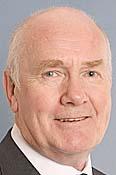 Lord ReidLord Reid of Cardowan
Several members of the Labour party offered opinions on the subject, among them Lord Reid of Cardowan, who commented:
“I confess immediately that I am not a scientist, chemist, agricultural expert or farmer. However, as I understand it, the burden of what the Minister has said is that there is no evidential benefit from organic food as far as human beings and health are concerned. Can we work on the assumption that, whatever the details of it, the money spent by DEFRA is for environmental and sustainable agricultural reasons, rather than for reasons of health?”
“That is absolutely right,” replied Baroness Jolly, who previously spoke of the environmental pluses associated with organic farming. “It is up to the consumer to decide how they spend their money on fruit and vegetables. There are many reasons why an individual might wish to choose organic products, but nutritional benefit should not be one of them.”