
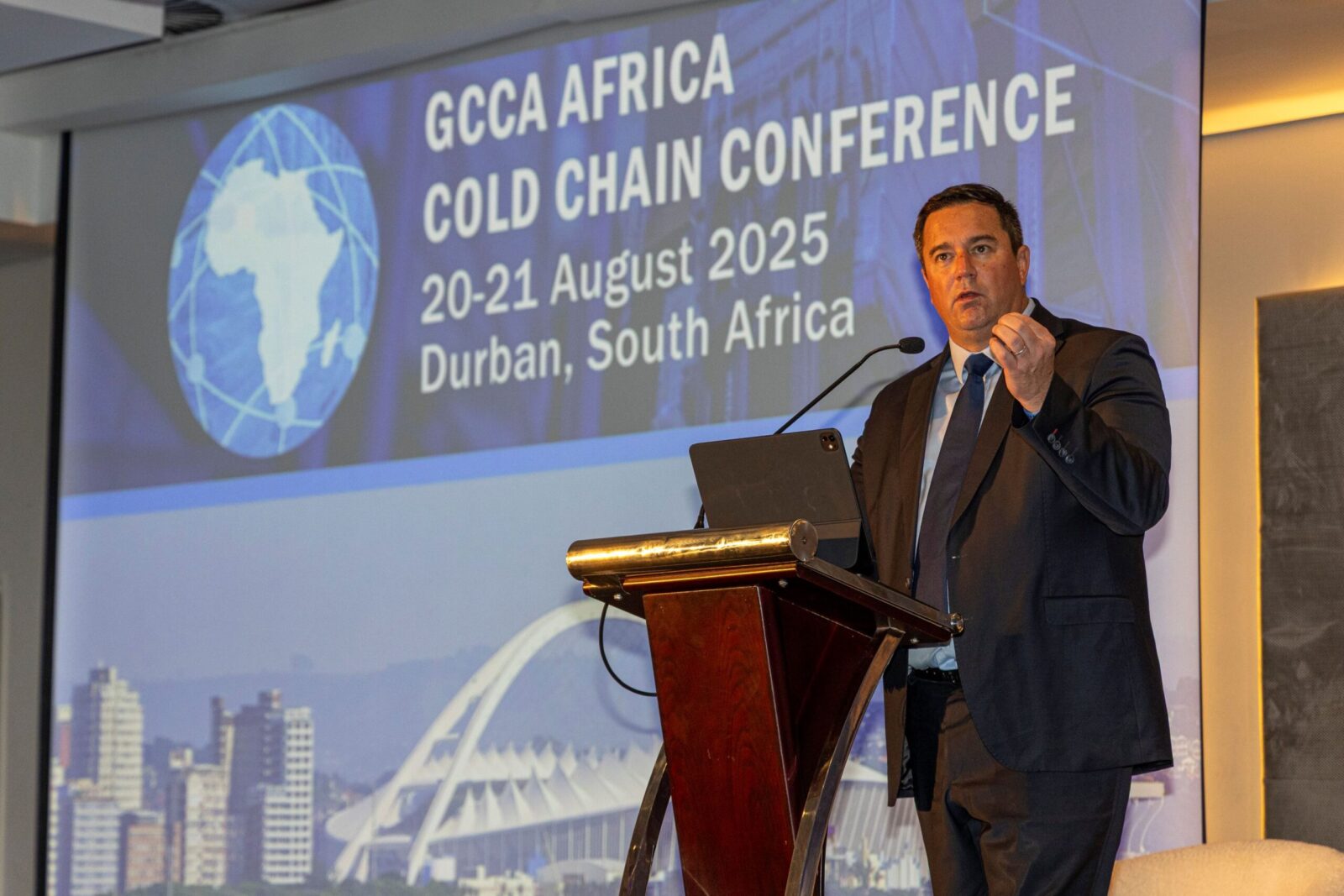
Speaking at the Global Cold Chain Alliance (GCCA) Africa Conference 2025 in Durban on August 21, South Africa Minister of Agriculture John Steenhuisen described the cold chain as “at the heart” of food security,
“The cold chain is … the artery through which Africa’s food system flows. Without it, farmers lose, consumers suffer, and economies falter. With it, we can feed more people, create more jobs, and compete more confidently on the world stage,” said Steenhuisen.
The Minister also emphasized the importance of growing the cold chain in rural Africa: “When government, agribusiness, and logistics companies collaborate to expand cold chain networks into rural areas, the effect is transformative. It means fewer losses. It means new jobs in packing houses, trucking and storage facilities. It means rural producers are not trapped in subsistence but are linked into regional and global markets. This is not charity. This is smart economics. Rural cold chain access is rural development in action.”
Highlighting the importance of collaboration to transforming Africa’s cold chain, Steenhuisen noted: “Government cannot deliver cold chains without the private sector. Industry cannot thrive without enabling policy. Farmers cannot succeed without infrastructure.”
GCCA Director for Africa Paul Matthew welcomed Steenhuisen’s declarations, stating: “A year ago we laid down our ‘Call to Action for African Cold Chain.’ The Minister’s words today show the continuing impact of this advocacy. We know how much further there is to go in building the temperature-controlled logistics infrastructure that will help meet the economic potential of South Africa and of the African continent. We look forward to working closely with the Minister and across government to deliver the cold chain investment that will transform food resilience across the region.”
The GCCA Africa Conference 2025, which saw 120 cold chain leaders from across the African continent gather to examine pressing industry opportunities and challenges, explored a range of pressing topics in a packed two-day program. Themes explored included how smart technologies can transform food and pharmaceuticals logistics; emerging issues in trade and investment; and energy resilience in temperature-controlled logistics.