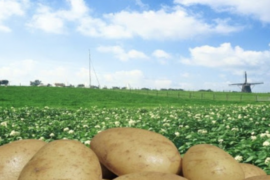
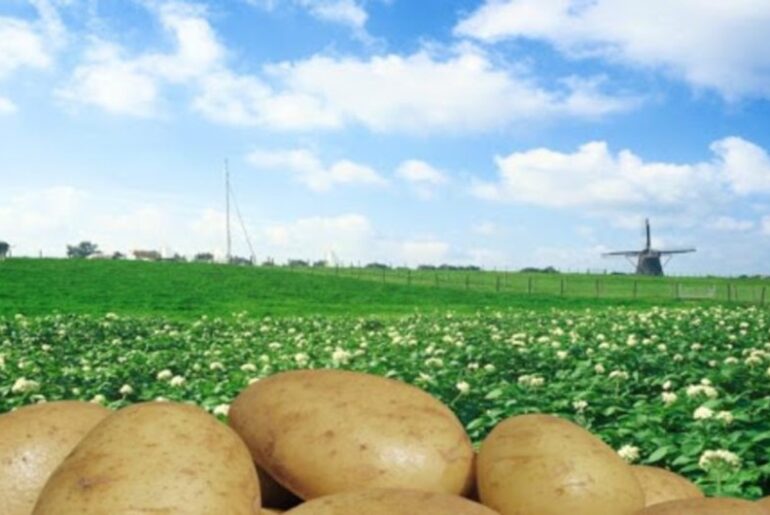
Early plantings amidst good germination conditions, and an expansion of potato hectarage in Europe is leading to a record harvest. Indeed, farmers across the North-western European Potato Growers (NEPG) zone recently have experienced some tough months, and forecasts for the near future are bleak.
In 2024, growers planted 7% more tubers (+37.000 ha) than the year before. This trend continued in the spring 2025, with a further increase in plantings. Nearly 40,000 additional hectares were devoted to potatoes for consumption, bringing the total area to 608,000 hectares in Belgium, Germany, France and the Netherlands, which amounted to 7% more than last year. Based on trial digs across the zone, members of the NEPG expect a record harvest of around 27,3 metric tons. This is 2,65 metric tons (+ 11%) more than the 2024 harvest.
The increase in hectarage was stimulated by information disseminated during the last two seasons about rising and growing demand from processors and rising processing capacity, higher contract prices and the status of potatoes as a profitable crop compared to other crops.

However, this expansion is now being hampered by an imbalance between supply and demand. A significant portion of the harvest cannot be stored, and tens of thousands of tons have already been redirected to animal feed, biogas plants and composting facilities.
Lessons to be Drawn
The reality is clear. Agricultural production costs are among the few expenses that do not decrease, and nothing suggests they will fall in 2026. In this context, after the economic losses many farmers are set to face this year, a significant reduction in planted area next year is to be expected. The challenge now is in determining the extent of the decline in hectarage.
A press release issued by the NEPG, a non-political foundation devoted to improving stability and growth of the tuber processing supply chain in the EU, stated:
“We are experiencing a true growth crisis in 2025 – a supply crisis which could very well turn into a crisis of demand as early as 2026 if growers no longer have the economic capacity to keep up. The imbalance between supply and demand began this year, and it is becoming essential to restore balance starting next year.”
The NEPG stresses the importance of more and continued dialogue throughout the supply chain, along with sustainable production and preservation of resources. More collaboration and communication is needed throughout the value chain. The sector must clarify and share its development outlook if it wants to avoid a supply breakdown.
“Growers must seriously consider producing under economically viable conditions, and not simply according to what processors expect them to deliver,” emphasized the NEPG press release. “With climate change accelerating, potato cultivation is becoming not only riskier and more expensive, but also putting growing pressure on the natural resources it relies on: soil, water and biodiversity. Preserving this capital is the essential condition to continue farming successfully in the future.”