
Innovation is rife across the frozen fruit and vegetable sector’s key areas, including product development, sustainability and health-focused offerings. Subsequently, packers are focusing on creating healthier products containing lower salt and fat content and higher protein, with cleaner ingredient lists.
The frozen fruit and vegetable segment in the United Kingdom is worth just under £750 million, according to Kantar (52-week data ending June 15, 2025). Vegetables accounted for £549 million during that period, with the category remaining relatively flat year-on-year (+0.3%).
“Household penetration remains high at 87%, but we’re seeing a shift towards smaller baskets and less frequent purchasing, reflecting broader market trends,” said Rebecca Law, business and insights manager at Greenyard Frozen UK. “It’s one of the few categories that naturally aligns with what today’s consumers are seeking – taste, value, convenience, nutrition and sustainability.
“A clear seasonal correlation has also emerged, with demand for traditional cold weather vegetables dropping during warmer months. This trend has been particularly noticeable this summer and may become more pronounced as climate change continues to influence shopper behavior.”
In response, manufacturers like Greenyard, are proactively adapting to these evolving consumer needs by promoting frozen vegetables for cold-use formats such as salads and quick meals, and by introducing convenient, easy-to-use pack formats, vegetable kits with light sauces, and flavored BBQ-ready mixes.
Frozen fruit, on the other hand, is worth £195 million (52 w/e), showing impressive growth of 10% year-on-year. With 33% penetration, the category continues to expand as health-conscious consumers look for nutrient-rich, convenient options.
“Strong retailer promotions have further fueled interest, encouraging shoppers to explore the versatility of frozen fruit – from breakfast toppers and crumble bases to refreshing summer snacks,” said Law.
The processed and frozen fruits market has been impacted by factors such as changing consumer preferences and increasing competition. However, the convenience offered by frozen fruits and the growing demand for healthy food options are driving the market forward, according to Statista:
“With the rise of health-conscious consumers, the processed and frozen fruits market in the fruits and nuts market within the food market in the UK has seen a shift towards a demand for organic and natural frozen fruit options. This trend is driven by a growing awareness of the benefits of a plant-based diet and a desire for clean and nutritious food options. Additionally, the increasing popularity of vegan and vegetarian lifestyles has also contributed to the demand for processed and frozen fruits made from natural and sustainable sources.”
Upward Trajectory
The popularity of frozen fruit and vegetables has increased in both the foodservice and retail sectors, with the Covid-19 pandemic playing a significant role in regaining consumer interest in the benefits of frozen food. Although consumer and foodservice engagement may have dropped slightly post-lockdown, interest has returned as increasingly busy lifestyles and the need or convenient and healthy options takes hold.
“There is a significant long-term trend towards greater use of frozen fruit and vegetables in the foodservice sector,” said Rupert Ashby, chief executive of the British Frozen Food Federation (BFFF). “We often hear from the chefs we work with that they value its consistency, year-round availability and increasing quality, as well as the reduced levels of waste associated with it.”
According to Statista, the processed and frozen vegetables market is expected to show a volume growth of 5.7% in 2026, while revenue is forecast to grow annually by 8.90% (CAGR 2025-30).
“In the United Kingdom, the processed and frozen vegetables segment of the vegetables market within the overall food market is heavily influenced by the country’s strict regulations on food safety and labeling,” explained a Statista analyst. “This has led to a higher demand for organic and locally-sourced frozen vegetables. Additionally, the growing trend of plant-based diets in the UK has driven the market for frozen vegetables as a convenient and healthy option. Furthermore, the country’s short summers and long winters make frozen vegetables a popular choice for year-round consumption.”
Popular Products
According to the BFFF, staples like peas, sweetcorn and spinach remain strong, alongside prepared vegetable mixes and potato products.
“Peas remain a firm favorite in British households, with around two-thirds of the population buying frozen peas and over 100 million packs sold annually,” said Law. “We’re proud to process and supply a significant portion of British-grown peas.”
When it comes to frozen vegetables, packers are getting more creative, introducing new variants with different flavor combinations.
“We’re increasingly seeing products with flavor twists, like gratins and seasoned potatoes gaining popularity both in retail and foodservice,” said Ashby. “In fruit, berries dominate thanks to their versatility, and their ability to bring a splash of summer flavor and color at any time of year.
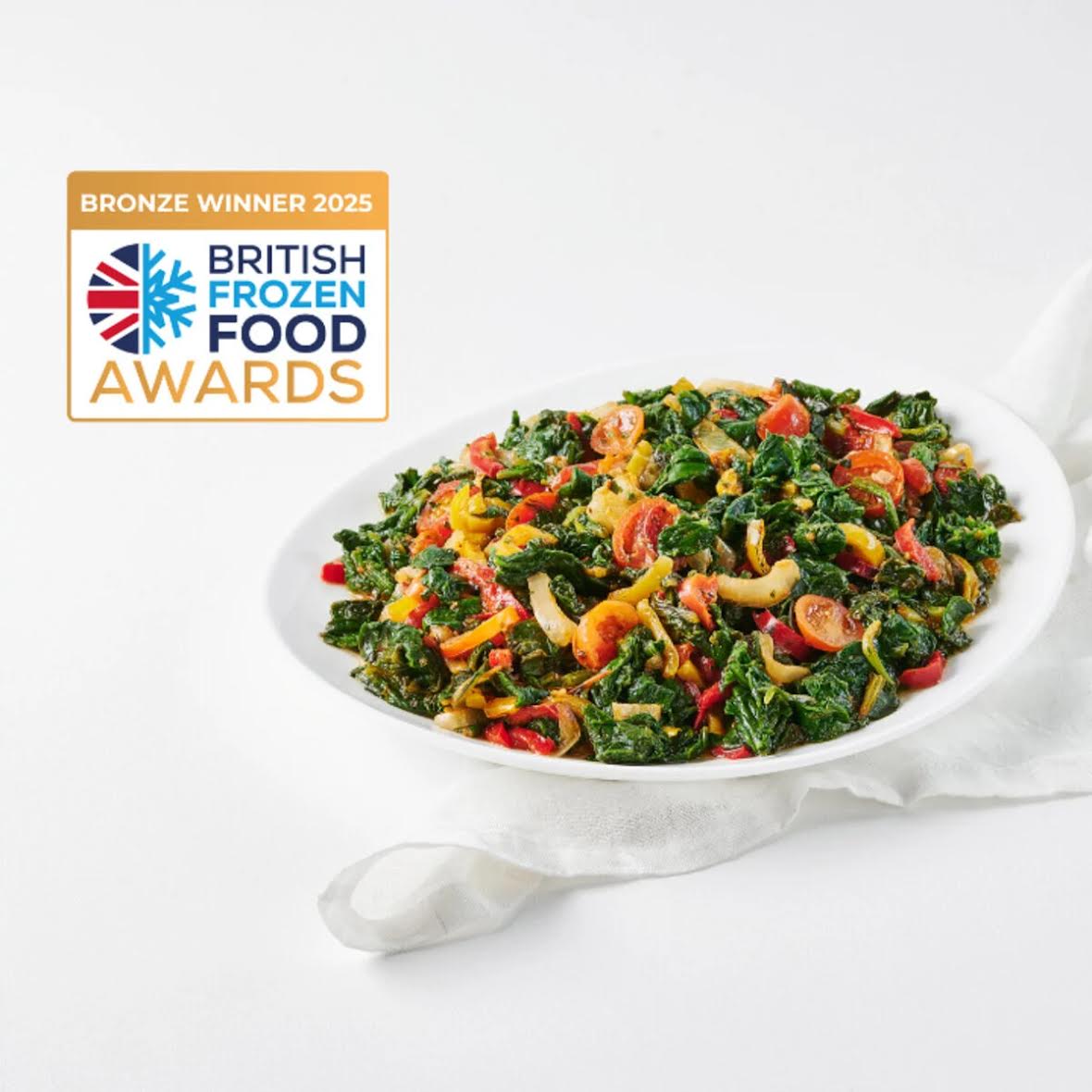
“Innovation is exploding in foodservice, which was demonstrated by the entries to the 2025 Frozen Food Awards. For example, Agristo’s Marco Pierre White Potato Loops, and Ardo Foods’ Spinach Mediterranea (pictured above) – a blend of spinach, cherry tomatoes, grilled red and yellow peppers, and grilled onions — both wowed the judges in the foodservice categories. In retail, products like PACK’D Organic Spinach and Organic Cauliflower Rice show the ongoing push towards premium, organic vegetable options.”
Strong demand for convenient and low-prep options has been reported, which has seen manufacturers focus development on reengaging lapsed shoppers to show them that frozen vegetables are far from bland.
“We’re launching products that bring flavor and inspiration to mealtimes, such as Asian-style stir-fry mixes, peri-peri steamed rice bags inspired by Nando’s, and lemon & herb green veg medleys,” said Law. “They tap into broader food trends and global flavors, making frozen exciting, affordable and accessible.”
Berries are leading the way when it comes to the frozen fruit category, with blueberries often becoming repurchased by consumers who value their convenience, value for money and the taste.
“Smoothies are another growing trend, thanks to their ease of use,” pointed out Law. “Our nutrient-enriched smoothie mixes – particularly those developed to support protein intake, gut health and brain function – are seeing strong performance as consumers increasingly seek out functional foods.
“Frozen fruit and vegetables offer a powerful combination of value, convenience, nutrition and sustainability — all key priorities for today’s shopper. Whether it’s reducing mealtime prep, supporting pure-plant lifestyles, or helping consumers enjoy seasonal produce year-round, frozen fruit and vegetables are no longer just a fallback, they’re a smart, first-choice solution.”
“Frozen fruit and vegetables offer a powerful combination of value, convenience, nutrition and sustainability — all key priorities for today’s shopper. Whether it’s reducing mealtime prep, supporting pure-plant lifestyles, or helping consumers enjoy seasonal produce year-round, frozen fruit and vegetables are no longer just a fallback, they’re a smart, first-choice solution.”
— Reported by Sarah Welsh