Norway exported seafood worth NOK 16.6 billion in November, a decrease of NOK 608 million, or 4 per cent, compared with the same month last year.
“This is the second month in a row that seafood exports have fallen in value compared with the same month last year. In November, even historically high prices were unable to compensate for the decline in volume for a number of wild-caught species,” stated Christian Chramer, chief executive officer of the Norwegian Seafood Council (NSC).
The Norwegian krone has strengthened against the US dollar and several Asian currencies compared with November of 2025. As a result, the year-long currency effect has also been reduced.
“This means that Norwegian seafood has become more expensive to buy in overseas markets,” said Chramer.

Significant Decline in Mackerel
As in October, there was also a sharp decline in export volumes for mackerel in November. Last month, Norway exported 21,655 tons of the fish, which was the lowest volume in a November month since 2010 and a decrease of 51 per cent compared with November last year.
“Quota cuts are necessary to ensure that our wild fish stocks continue to be managed sustainably, but they also affect seafood exports. Lower volumes contributed to record-high prices for mackerel, herring and important cod products in November,” said Chramer.
Challenging Times for Onshore Industry
Two price levels in particular were reached for the very first time in November. The export price for a kilo of frozen whole cod passed NOK 100, and the export price for a kilo of frozen whole mackerel passed NOK 50.
“It may seem tempting to celebrate such high prices, but the truth is that they come against a demanding backdrop. For the Norwegian onshore industry, it is challenging to trade raw materials and hope that the market is able to absorb them. For customers, this means that they have to pay more for the fish in the shop,” explained Chramer.
Asia Takes Market Share from Europe and USA
The largest markets for Norwegian seafood exports in November were Poland, Denmark and the United States. China saw the greatest growth in value, with a NOK 196 million increase in exports, or 23 per cent, compared with the same month last year.
“The positive trend in the Asian market also continued in November. China, Vietnam, Thailand and South Korea are examples of countries that now account for a larger share of total Norwegian export value. This is happening at the expense of Europe and the USA,” said Chramer.
New Electronic Exchange with China
In November, Norway exported farm-raided fish worth NOK 12.1 billion. This accounted for 73 per cent of the total export value of Norwegian seafood last month.
“Salmon is still the engine of Norwegian seafood exports. At a time when trade is shifting towards Asia, it is positive that the Norwegian and Chinese authorities have developed a joint solution for the electronic exchange of health certificates with China. This will simplify our trade considerably in the future,” said Chramer.
2025 Seafood exports have Topped NOK 165 Billion thus Far
So far this year, Norway has exported seafood worth NOK 165.4 billion. This is an increase of NOK 5.2 billion, or 3 per cent, compared with the same month last year. In the record year 2024, Norway exported seafood worth NOK 175.2 billion.
If the export value in December remains at the same level as last year, total seafood exports in 2025 will exceed NOK 180 billion.
Decline in Salmon Exports
Norway exported 126,191 tons of salmon worth NOK 11.4 billion in November. Value declined by NOK 472 million, or 4 per cent, compared to the same month last year, while volume fell by 3 per cent. Poland, France and the USA were the largest markets .
China had the highest value growth in November, with an increase in export sales of NOK 165 million, or 35 per cent, compared with the same month last year. Export volume to the PRC amounted to 6,598 tons, which was 47 per cent higher than the same month last year.

“China continues the growth trend that the market has seen throughout the year, but is not the only one that is growing. The UK and Thailand are close behind,” said NSC seafood analyst Paul T. Aandahl.
Thailand Overtakes Japan and South Korea
Thailand is emerging as one of Norway’s most important markets for salmon and trout in Asia. Exports of the two fish species together make the country the second largest market in Asia in terms of volume, as it has overtaken established salmon markets such as Japan and South Korea.
“Thailand’s appetite for Norwegian salmon does not appear to be stagnating. Thanks to good preference and competitive prices, Norway has increased its market share to over 73 per cent. So far this year, the category for Atlantic salmon and trout has increased by 8 per cent,” said Åshild Nakken, the Norwegian Seafood Council’s envoy to Southeast Asia.
Decline to the EU Market
The EU’s share of Norwegian salmon exports fell in November. With an export value of NOK 6.9 billion, it totaled 61 per cent. In the same month last year, it was 66 per cent.
“This is a trend that we have seen throughout 2025. In November, the share to Asia increased from 18 per cent last year to 21 per cent this year. This is due to increased demand and increased access to fish of sizes favored in Asia,” said Aandahl.
Value Growth and Volume Decline for Trout
Norway exported 6,320 tons of trout with a value of NOK 594 million in November, an increase of NOK 10 million, or 2 per cent, compared with the same month last year.
Volume fell by 3 per cent. Poland, the USA and Thailand were the largest markets for trout in November. Poland saw the greatest growth in value, with an increase in purchases of NOK 61 million, or 206 per cent, compared with the same month last year. The export volume to Poland weighed in at 1,038 tons, which was 170 per cent higher than the same month last year.
Best November Ever for Fresh Cod
Norway exported 3,163 tons of fresh cod worth NOK 246 million in November. The increase in value was NOK 105 million, or 75 per cent, compared with the same month last year, while growth in volume was 54 per cent. Denmark, the Netherlands and Lithuania were the largest markets.
The export volume of fresh cod in November was the second highest ever and has only been higher in 2016.
“In terms of value, this is the highest export value for fresh cod ever in the month of November. It was NOK 69 million higher than in the previous record month of November 2022. Both wild and farmed cod contributed to the growth in November,” said NSC analyst Eivind Hestvik Brækkan.

Farmed Cod Accounts for More than Half of the Value
Significantly higher catch volumes compared with November last year resulted in increased export volumes for fresh wild cod, which rose by 47 per cent to 1,477 tons, while the export value increased by 68 per cent to NOK 121 million. Export volumes increased by 60 per cent to 1,686 tons, while the value rose by 83 per cent to NOK 125 million. Farmed cod accounted for 51 per cent of the export value of fresh cod.
Solid Increase for Frozen Cod
Norway exported 3,245 tons of frozen cod worth NOK 308 million in November. The rise of NOK 139 million, or 82 per cent, compared with the same month last year represented volume growth of 57 per cent. The UK, Poland and Vietnam were the largest markets.
While landings of frozen cod fell in November, there was a solid increase in export volumes, indicating a reduction in stocks in Norway.
“The prospect of significantly lower cod quotas in 2026 appears to have been reflected in the export price. For the first time, the export price of frozen whole cod has exceeded NOK 100. In November, the export price was NOK 103 per kg, a full NOK 12 per kg higher than the previous record month, which was in October this year,” said Brækkan.
Strong Volume Growth in UK
Exports of frozen cod to the United Kingdom remained strong in November, with volume growth of 109 per cent to a total of 720 tons.
“So far this year, as much as 34 per cent of the export value of frozen cod has gone to the UK. We have to go all the way back to 2006 to find the last time such a high proportion was exported to the United Kingdom,” explained Brækkan.
Value Increase for Clipfish
Norway exported 6,562 tons of clipfish worth NOK 724 million in November, as value increased by NOK 42 million, or 6 per cent, compared to the same month last year. However, volume fell by 13 per cent. Portugal, Congo and Brazil were the largest markets for clipfish in November
For saithe clipfish, export volume fell by 3 per cent to 3,535 tons, while export value rose by 25 per cent to NOK 233 million.
For clipfish from cod, the export volume declined 24 per cent to 2,496 tons, while export value slipped 2 per cent to NOK 451 million.
“Congo, which is one of our largest markets for saithe clipfish, had the greatest growth in value in November, with an increase in export value of NOK 38 million compared with the same month last year,” said Brækkan.
Volume Decline in Portugal
After two months of solid volume growth, there was a downturn in the export volume of cod clipfish to Portugal in November, as tonnage fell by 23 per cent to 2,171, while export value increased by 2 per cent to NOK 396 million.
“So far this year, export volumes to Portugal have fallen by only 4 per cent, which indicates continued good demand for clipfish in our largest cod market,” stated Brækkan.
Good Month for Salted Fish
Norway exported 1,515 tons of salted fish worth NOK 167 million in November. This was an increase of NOK 25 million, or 18 per cent, compared with the same month last year. The growth in volume was 1 per cent, while Portugal, Italy and Greece were the largest markets.
Portugal generated the highest value growth in November, with an increase in export value of NOK 23 million, or 25 per cent, compared with the same month last year. Volume shipped to Portugal weighed in at 930 tons, which was 14 per cent higher than during the same month last year.
Salted cod is the product with the lowest volume decline among our Norway’s cod products. So far this year, export volumes have only fallen by 5 per cent in total, and exports to the largest market, Portugal, are unchanged from last year.
“EU sanctions against Russian cod and strong industrial demand in Portugal for processing into clipfish and frozen diluted products that are easy to prepare contributed to the growth,” explained Brækkan.
Value Growth and Volume Decline for Stockfish
Norway exported 477 tons of stockfish with a value of NOK 182 million in November. The value increase amounted to NOK 19 million, or 12 per cent, compared with the same month last year, while volume declined by 10 per cent. Italy, Croatia and the USA were the largest markets.
“Despite the fall in volume, higher export prices contributed to November being the month with the highest ever export value for stockfish in a single month. This was NOK 19 million higher than the previous record month, which was November 2024,” said Brækkan. “Italy, which is our largest market for cod stockfish, had the highest value growth in November, with an increase in export value of NOK 13 million, or 13 per cent, compared with the same month last year. The export volume to Italy ended at 269 tonnes, which is 7 per cent lower than in the same month last year.”
Increasingly Tough Battle for Raw Materials
So far in 2025, the export volume of cod stockfish to Italy has fallen by 13 per cent compared with the same period last year, to a total of 1,498 tons. This is the lowest volume ever in the first 11 months of the year.
“Lower cod quotas and higher landing prices are contributing to an increasingly tough battle for raw materials, and the production of stockfish involves many months from the purchase of raw materials to the sale of the finished product,” said Brækkan.
He added: ”The long production time entails risks along the way, both in terms of natural variations in the weather that affect quality, price risk and a high level of tied-up capital.
With significantly higher raw material prices this year, it is therefore no surprise that there is a significant decline in stockfish exports.”
Weak November for Herring
Norway exported 29,556 tons of herring worth NOK 577 million in November, with the largest markets being Poland, Denmark and Egypt. Value fell by NOK 190 million, or 25 per cent, compared with the same month last year, while volume declined 27 per cent.
At the end of November, the quota for NVG herring had been fished out. In the autumn season, which started in mid-October, a total of 135,000 tons were landed. This was a decrease of 25,000 tons compared with the autumn season last year.
“Since the vast majority of the herring exported is frozen, shifts in catches and when the goods are exported can result in large variations on a monthly basis. That’s why it’s important to look at the long-term trends in exports,” said Jan Eirik Johnsen, head of pelagic species at the Norwegian Seafood Council.
Good Demand for Fillet Products
The reduction in volume this autumn is a combination of lower exports of frozen whole herring and the fact that goods are in storage in Norway, partly due to a lack of storage capacity in parts of Europe.
“Demand for fillet products is reported to be good, but weaker for frozen whole herring. At the same time, there are signals that players in several markets are unable to keep up with mackerel prices. They are therefore increasing purchases of whole frozen herring to keep the production wheels turning,” explained Johnsen.

The significant price growth that has characterized herring exports for several years has now stagnated.
“For frozen whole herring, the price in November is lower than it was in the same month last year. This is probably due to both a slightly slack market and the fact that the NVG herring quota will be significantly increased next year,” said Johnsen.
Sharp Fall for Mackerel
Norway exported 21,655 tons of mackerel worth NOK 1.1 billion in November, as value fell by NOK 144 million, or 11 per cent and volume plummeted by 51 per cent, compared with the same month last year. South Korea, Vietnam and China were the largest markets.
The strong trend of falling volumes and strong price growth for mackerel continued in November.
“Export volumes are affected by two factors: Early quota utilization and tight supply. As a result, the export price for mackerel under 600 grams is above NOK 50 per kg for the first time. This is 81 per cent higher than in November last year,” said Johnsen.
Krone has Strengthened Against Asian Currencies
In addition to high prices, the Norwegian krone has gained value over major Asian currencies. Compared to November of last year, the krone is 8 per cent stronger against the Japanese yen and 12 per cent higher in vale against the Korean won. In addition, it is 8 per cent stronger vis-à-vis the US dollar, which is an important currency for trade in many Asian markets.
“It will be very exciting to see how consumers react to the prices when the autumn season mackerel hits the markets from mid-December onwards,” commented Johnsen. “There is still excitement about setting the quota for mackerel in 2026, as the coastal states have yet to agree on a total quota.”
Strong Value Increase for King Crab
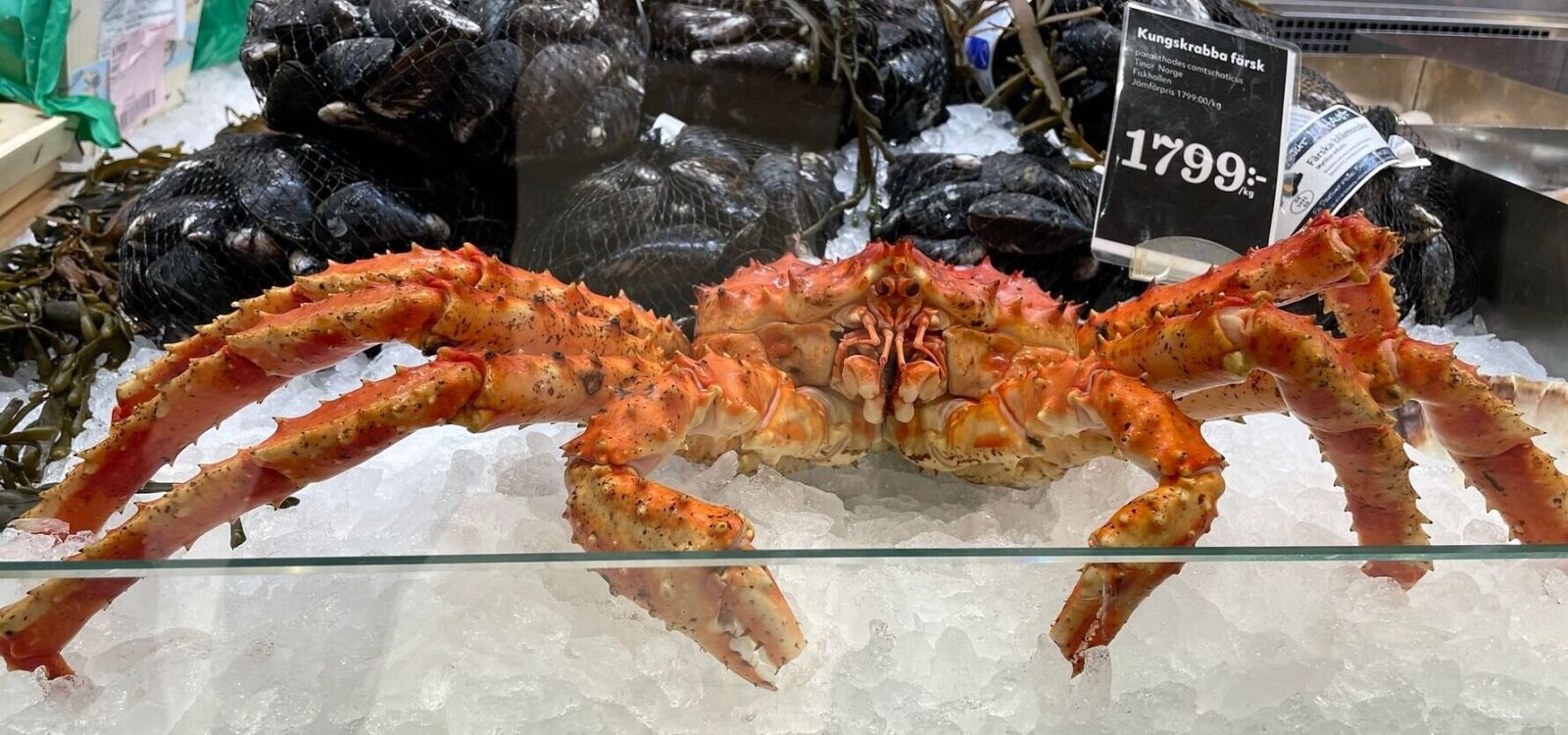
Norway exported 83 tons of king crab worth NOK 73 million in November, amounted to an increase in value of NOK 25 million, or 52 per cent, compared with the same month last year. Volume fell by 1 per cent. The USA, Canada and Italy were the largest markets.
As the king crab season is now coming to an end. Josefine Voraa, head of shellfish at the Norwegian Seafood Council, commented: “There are only small volumes available in the quota, so a fierce battle for the raw material is expected in the run-up to the festive season, when consumption of king crab traditionally increases in many markets.”
The shift towards more frozen production continued in the penultimate month of the year. Frozen king crab dominated exports with 54 tons, at an average price of NOK 999 per kg.
This is 70 per cent higher than in November last year and is also the highest export price ever recorded for frozen king crab.
USA Market Takes Most of the Frozen Exports
As much as 71 per cent of the export volume of frozen king crab ended up in the United States in November.
“Demand is strong and the Americans don’t seem to be able to get their hands on enough frozen king crab, even though this year’s production of Alaskan red king crab is entering the market at full speed,” said Voraa.
Decline for Live King Crab
The export volume for live king crab amounted to 29 tons, a decrease of 30 per cent compared with November last year.
The average price was NOK 641 per kg, an increase of 15 per cent.
“As a result of high raw material and export prices, exports to Asia are almost non-existent, and exports to the USA have fallen by 11 tons, or 51 per cent,” reported Voraa.
Very Low Exports of Snow Crab
Norway exported five tons of snow crab worth NOK 1 million in November. While the value was unchanged from the same month last year, volume fell by 53 per cent. The UK, Belgium and Japan were the largest purchasing countries.
“While waiting for the first landings to come in in December, after fishing resumed following the closed season, only limited volumes are being exported,” said Voraa.
The UK was the largest market in November and accounted for the greatest growth in value, with an export volume of 4 tons, worth NOK 1.1 million.
Limited Supply Characterized Prawn Exports
Norwegian producers exported 1,109 tons of prawns worth NOK 93 million in November. The value fell by NOK 50 million, or 35 per cent, compared with the same month last year, while volume declined by 56 per cent
China, Sweden and Denmark were the largest markets.
Weaker landings in the prawn fishery in the Barents Sea are now clearly reflected in exports for November.
“Demand in several markets is good, but limited access to raw materials is pushing up prices and causing clear changes in exports,” commented Voraa.
Decline in China
Frozen peeled prawns are down 42 per cent in volume compared with November last year, while prices are up 10 per cent. Exports to Sweden and Finland increased, but exports to the UK fell by 65 per cent, or 220 tons. Frozen, cooked shell prawns saw the biggest decline in terms of volume, down 63 per cent, while prices rose by 37 per cent.
“The decline is primarily greatest to China, which is down by 291 tons. However, the average price to China is still high at NOK 53 per kg. The market is now demanding more than we can supply,” said Voraa.
New Trend Results in High Prices
Frozen raw prawns fell by as much as 79 per cent in volume in November, but the export value only decline by 22 per cent because the average price increased by 280 per cent to NOK 83 per kg.
“This is because exports have previously gone to the pill industry in other countries, but we are now seeing a clear trend: Exports to China are increasing month by month – and at high prices. This is not the same product as traditional industrial production. The prawns enter China, are peeled there and eaten raw.